
Every box you pack gets handled at least four times. Once when you fill it, once into the truck, once out of the truck, and once when you unpack it. Boxes full of things you do not actually want get handled all four times too, and then they sit in the new garage for two years.
That is the whole argument for decluttering before a move rather than after. It is not about minimalism or having a tidy house for the photos. It is that sorting first makes the packing shorter, the truck smaller, the unpacking faster, and the new place immediately livable instead of a storage unit with furniture in it.
This guide lays out when to start, what order to work in, and how to keep the donations and hauling from becoming their own project.
When to start, and why sorting comes before packing
Six weeks out is comfortable for a whole house. Three weeks is workable if you are focused and willing to give up a couple of evenings a week. Less than that and you will pack things you do not want, which is fine but expensive in time later.
The rule that matters more than the calendar is this: do not make keep or toss decisions while you are packing. Packing mode and deciding mode use different parts of your brain, and when they compete, packing wins because it has a deadline. You end up taping the box and promising yourself you will deal with it at the new house. You will not.
So run a sorting pass first, room by room, with tape and boxes out of sight. Only when a room has been sorted does it get packed. Rooms then pack dramatically faster, because everything left in them is something you actually want.
The room by room order of attack
Work from the spaces you barely use toward the spaces you use hourly. Storage first, living areas last. This order matters because the early rooms hold the most volume and the easiest decisions, which builds momentum, and because you need the kitchen and bedrooms functional until the final days.
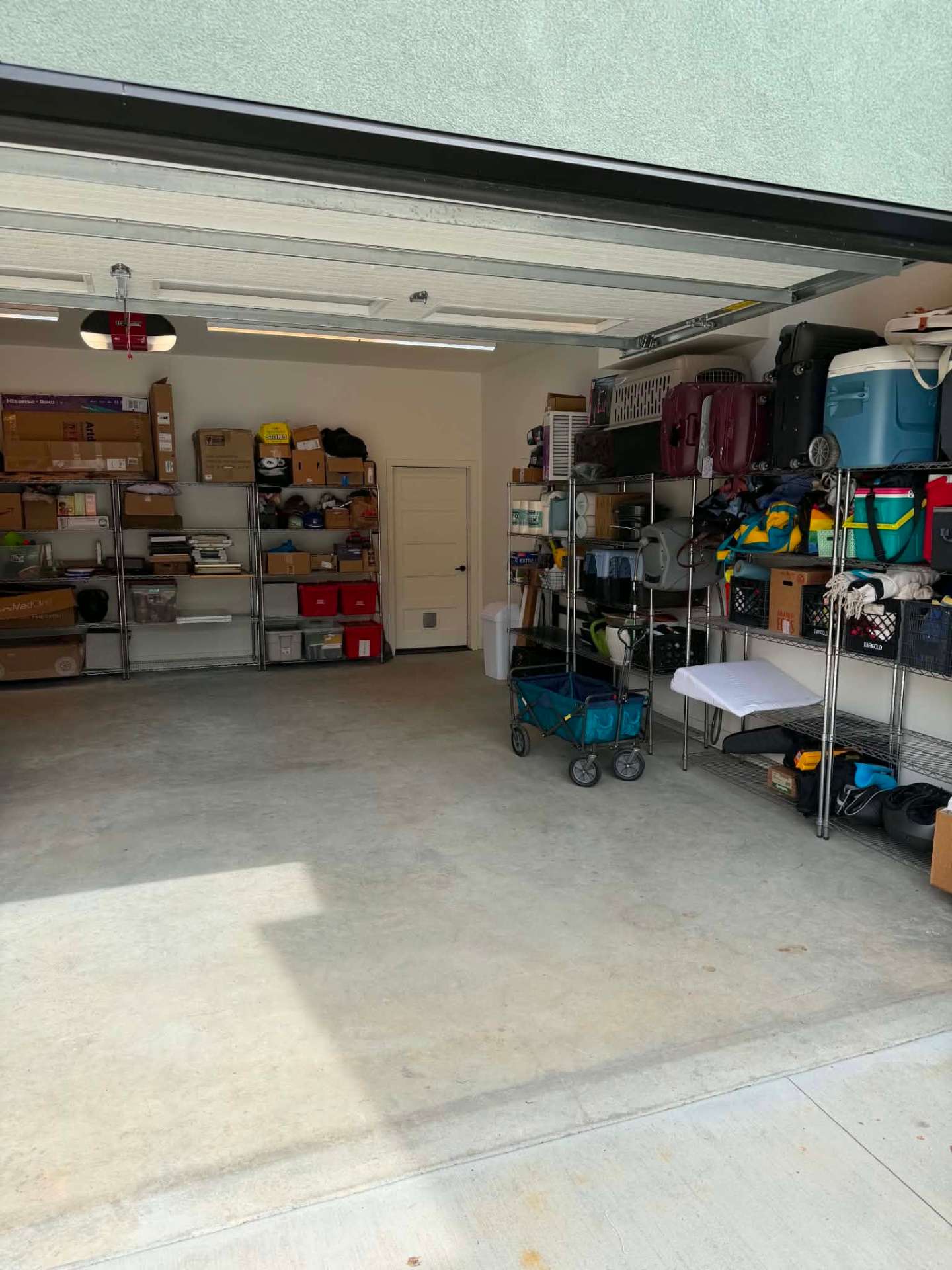
Garage, shed, and shop come first. This is where the biggest volume hides: duplicate tools, dead equipment, paint, scrap lumber, and boxes that moved in from the last house without ever being opened. Anything that made the last move unopened is a strong candidate to not make this one.
Basement, attic, and spare rooms are next, for the same reason. Then deep closets, linens, and the laundry room. Then books, hobbies, and the office, including the paperwork purge that everybody dreads and everybody is glad they did.
Kids rooms work best with the kids involved for a short, bounded session rather than a long one, and much better before packing energy runs out. Kitchen comes near the end since you are cooking until close to the move, though duplicate gadgets and the back of the pantry can be handled early. Bedrooms and bathrooms are last, in the final week.
- Week one: garage, shed, and shop
- Week two: basement, attic, and spare rooms
- Week three: closets, linens, and laundry
- Week four: office, paperwork, books, and hobbies
- Week five: kids rooms and the pantry
- Final week: kitchen, bedrooms, and bathrooms
How to make the decisions quickly
Sort by category, not by shelf. Gather all the towels, all the cords, all the baking pans, all the camp chairs. Duplicates only become visible when they are side by side, and duplicates are where most of the volume goes.
Three destinations only: moving, donate, and haul. Sell is a fourth destination and it is optional, but be honest about it. Anything set aside to sell that is still sitting there a week before the move is not being sold, it is being moved.
Useful questions when a decision stalls: is this worth hauling across town, do I have space for it in the new place, would I buy it again today, and is this something I am keeping or something I am storing. The hauling question in particular cuts through a lot, because it makes you picture the item in the new house instead of a vague someday.
Set a small, defined sentimental box per person. Not a rule about what is allowed in it, just a container. Constraints make sentimental decisions easier than open ended permission does, and it keeps the meaningful things from being scattered across nine boxes.
Handling donations and hauling in one pass
This is the step that derails the most moves. Sorting goes well, and then the house fills with bags for the thrift store, a broken dresser, an old mattress, and a pile of yard waste, all waiting for a free Saturday that never quite arrives. Eventually, under deadline pressure, it gets packed and moved instead.
Plan the exit before you start sorting. Know where donations are going, know what the local charities will and will not accept, and know what is going to the transfer station. Then move things out in batches rather than staging them in the hallway. Each batch that leaves the house is permanent progress.
The most efficient version is a single pass: an organized sort day where the donations, the recycling, and the hauling all leave with one crew on the same day. Nothing stages in the hallway, nothing goes back on a shelf, and no truck rental gets added to your moving week.
- Decide donation destinations before sorting starts
- Separate scrap metal and cardboard for recycling
- Move batches out the same day they are sorted
- Keep one clear staging area so nothing drifts back
Arriving at the new place
Decluttering before the move pays off most in the first week at the new house. Fewer boxes means the kitchen, closets, and bathrooms can be set up properly on day one rather than triaged.
Unpack in the reverse order of the sorting: daily use spaces first, storage last. And resist the urge to fill the new garage or basement immediately. Leave that space empty for a few weeks and set up the house first, otherwise the garage becomes the place unsorted boxes go to live, which is exactly the thing you just spent six weeks undoing.
If the timeline is tight or the volume is large, this is a sensible thing to share. A crew can handle a sort and haul pass before the movers come, or unpack and set up the new place after they leave, and either one takes weeks off how long the move feels.
Want this handled for you? See our Home Organizing service in the Wenatchee Valley.
Common questions
- How far ahead of a move should we start decluttering?
- Six weeks is comfortable for a full house and three weeks is workable if you stay focused. The important part is that sorting happens before packing rather than during it, because deciding what to keep while holding a roll of tape is how boxes of things you do not want end up in the new house.
- What should we sort first?
- Start with storage spaces rather than daily living spaces. Garage, basement, spare room, attic, and deep closets hold the highest volume of things nobody has touched in years, so the decisions are easier and the impact on the load is biggest. Kitchens and bedrooms come later since you use them right up to moving day.
- Can donations and hauling happen in one visit?
- Yes, and it saves a lot of weekend time. When sorting is done in an organized pass, the donations, recycling, and transfer station load can leave with the same crew on the same day, so nothing sits in the hallway waiting for a free Saturday.