
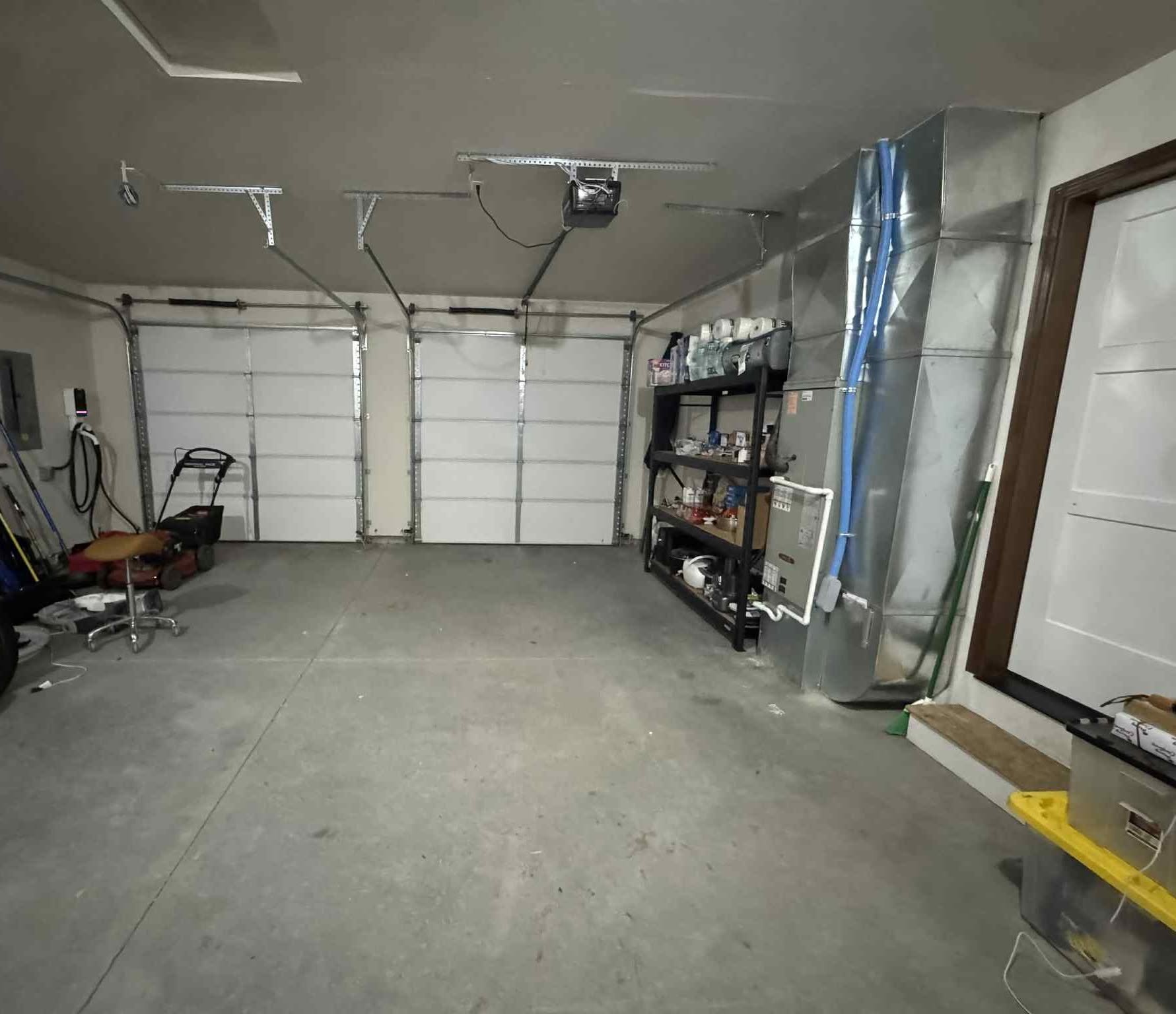
Garages in this valley work harder than garages in most places. One building has to hold winter gear, river gear, camping bins, yard equipment, tools, bikes in three sizes, holiday decorations, and whatever came from the last move. Then somebody also wants to park in it.
Which is why the garage is the space we get called about most. The good news is that a garage is one of the most satisfying rooms to reset, because the change is dramatic and the system holds up well once it exists. The bad news is that the usual approach, tidying one corner on a Saturday, almost never works.
Here is how a garage cleanout actually runs when it succeeds, whether you do it yourself or hand it to a crew.
Step one: empty it, do not tidy it
The single biggest difference between a garage that transforms and a garage that shuffles is whether everything comes out. Shifting bins from one wall to the other feels like progress for an afternoon and then looks identical by the next weekend.
Pick a dry day with a clear forecast and pull the contents onto the driveway. Yes, it looks alarming. That is the point. You cannot make good decisions about what to keep while half your belongings are hidden behind the other half, and you cannot design storage for a space you cannot see.
With the floor bare, look at the room itself for a minute before anything goes back. Where do the cars need to sit? Which wall gets sun through the door? Where is the outlet, the water heater, the panel? Those fixed facts drive the layout more than any container purchase will.
Step two: sort into keep, donate, and haul
Three destinations, not five. Keep, donate, and haul. Recycling is a subset of haul, and maybe, later, and not sure are not categories, they are how garages get re-cluttered.
Sort by category rather than by location. Gather every extension cord together, every paint can, every camping bin, every bike. Seeing all seven screwdriver sets at once makes the decision obvious in a way that finding them one at a time never does. Duplicates are where most of the volume disappears.
For anything you are genuinely unsure about, the honest test is whether you have reached for it in two full seasons and whether you would buy it again today. Broken things you intended to fix are the classic garage trap. If the fix has not happened in three years, it is storage, not a project.
Keep the donate pile moving out the same day if you can. Donations that sit in the garage overnight have a habit of quietly unpacking themselves back onto the shelves.
- Keep: used within two seasons and still working
- Donate: usable, but not by you, and out the same day
- Haul: broken, expired, ruined, or long dead projects
- Recycle separately: scrap metal, cardboard, and clean wood
Step three: shelving and wall storage that fits valley garages
Floor space is the thing you are actually buying back, so the goal is to get as much as possible onto walls and shelves. In practice that means tall shelving along the wall that the cars do not need, wall hooks and racks for anything with a handle or a wheel, and overhead or high shelving for genuinely seasonal bins.
Place by frequency, not by size. Items you touch weekly go at eye level between roughly waist and shoulder height. Heavy items go low, both because lifting a full tote overhead is how backs get hurt and because low shelves are more stable. Light seasonal bins go high, where reaching once or twice a year is fine.
Use matching, opaque, lidded totes for anything living in a garage in this climate. Cardboard boxes do not survive a valley summer or a mouse, and mismatched containers waste shelf depth. Clear bins look appealing in photos but turn into visual noise on a full wall.
Then zone the room by activity, because that is how families actually retrieve things. A typical layout we build: winter and snow gear in one zone, water and camping gear in another, yard and garden near the big door, tools and hardware near the workbench or shop wall, and long term storage highest and furthest back.
- Tall shelving on the wall the cars do not use
- Hooks and racks for bikes, shovels, rakes, and hoses
- Matching opaque totes with lids, labeled on two sides
- Zones by activity: winter, water, yard, tools, long term
Step four: labels, and the reset that keeps it working
Labeling is the least exciting step and the one that determines whether the garage still works in a year. The test is simple: could a teenager put something away correctly without asking anybody? If the answer is no, the system depends on you remembering, and it will drift.
Label on two sides of each tote so the label is readable however the bin ends up facing. Label the shelf edge too, so an empty spot tells you what belongs there. That small detail does more for long term order than any container upgrade.
Leave deliberate empty space. One clear shelf or an empty intake bin gives new arrivals somewhere to land that is not the middle of the floor. A garage packed to one hundred percent capacity has no way to absorb a normal week.
Then reset twice a year at the season change, when you are swapping snow gear for river gear anyway. Fifteen minutes of putting strays back and pulling out the next donation run keeps a finished garage finished. Left alone for three years, it slowly becomes the old garage again, just with nicer shelving.
When it makes sense to hand it off
Doing it yourself is entirely reasonable if you have a free weekend, a truck, somewhere to take the load, and the physical ability to move it. Plenty of people do.
It is worth handing off when any of those pieces is missing, and especially when the disposal is the bottleneck. Most stalled garage projects are not stalled on sorting. They are stalled because there is nowhere to put six bags of donations and a dead treadmill, so the piles sit in the middle of the floor and eventually get pushed back against the wall.
A crew also changes the timeline. What takes a family six weekends is generally one or two days with two people, a truck, donation runs, and shelving going in as part of the same visit. If the garage has been on your list for more than a year, that is usually the real answer.
Want this handled for you? See our Garage Organizing service in the Wenatchee Valley.
Common questions
- How long should a garage cleanout take?
- A single bay garage is usually one focused day. A packed two or three car garage with shelving going in is typically one to two days with a two person crew. Doing it alone on weekends tends to stretch across a month, mostly because the sorting stalls when there is nowhere to put the donations.
- What is the best way to store seasonal gear in a garage?
- Group by season and activity, then place by how often you reach for it. Winter gear together, water and camping gear together, yard and garden together. Heavy items low, light seasonal bins high, and anything you use weekly at eye level. Wall hooks and racks for bikes and long handled tools free up more floor than most people expect.
- How do I keep the garage organized after a cleanout?
- Label everything, keep one clearly empty shelf or bin as intake space, and do a fifteen minute reset at each season change. Clutter comes back when items have no obvious home, so the labels are doing more work than the shelving.